[PDF, EPUB] Download On the steps of the
On the steps of the throne: The King's family and its political and cultural role in the Spanish monarchy (16th-18th centuries) by Alejandra Franganillo Alvarez, Santiago Martinez Hernandez, Jonathan Spangler
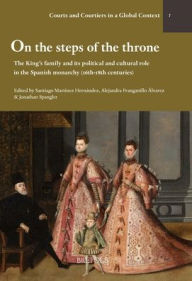

- On the steps of the throne: The King's family and its political and cultural role in the Spanish monarchy (16th-18th centuries)
- Alejandra Franganillo Alvarez, Santiago Martinez Hernandez, Jonathan Spangler
- Page: 264
- Format: pdf, ePub, mobi, fb2
- ISBN: 9782503602806
- Publisher: Brepols Publishers
Free downloads of ebooks for kobo On the steps of the throne: The King's family and its political and cultural role in the Spanish monarchy (16th-18th centuries)
The aim of this book is to forge a new critical perspective on the Spanish Habsburgs' family networks by studying the roles performed by princes and princesses of the blood, of different ranks and status, in the service of the Spanish monarchs. The chapters included draw on a range of case studies in order to rethink the dynastic and political role assigned to the king's relatives. They also analyse the problematic issues generated by the court, ceremonial, diplomatic, dynastic, and governmental duties undertaken by these political actors. In doing so, these studies forge a deeper understanding of the conflicts prompted by the administration of the extensive transnational community of Spanish Habsburg interests and allegiances. The innovative and insightful studies included in this volume are drawn from both unpublished doctoral theses as well as ongoing research projects. In this sense, it seeks to contribute to the evolving historiographical debate on the role played by a range of agents who have not been studied in depth by historians, above all with a focus on the construction of the Spanish Habsburg monarchy in the early modern period. The approach we have adopted has been to prioritize little-known and less-studied agents, contexts, and periods from the Spanish Habsburg sphere, which are nonetheless highly relevant for developing a deeper knowledge of the potential and expectations assigned to the king's extended family, whether legitimate or illegitimate. Furthermore, this book addresses the problematic issues and conflicts that were prompted by these political agents in undertaking various diplomatic, dynastic and governmental roles.
[PDF] THE TEACHING OF HISTORY OF RWANDA A PARTICIPATORY .
• In this process, King Musinga lost, day after day, his power, his prestige and his authority as King among his big “feudataires” who were put in power by .
The Reign of Louis XIV (1643-1715): An Overview - History
Louis XIV succeeded his father, Louis XIII, as king at the age of five. He ruled for 72 years, until his death in 1715, making his reign the longest of any .
[PDF] The Invention of Tradition - PSI424
DAVID CANNADINE is Professor of History at Columbia University. His books include Lords and Landlords: The Aristocracy and the.
United Kingdom - 18th-century Britain, 1714–1815 | Britannica
United Kingdom - 18th-century Britain, 1714–1815: When Georg Ludwig, elector of Hanover, became king of Great Britain on August 1, 1714, the country was in .
The Creation of a Spanish Heritage for the Bourbon Kings - jstor
In El Pelayo, genealogical prophecy elaborates a collective identity that ac- commodates both the French Bourbons and their Spanish subjects within the. Spanish .
Spanish literature | History, Authors, Books, Characteristics, & Facts
Spanish literature, the body of literary works produced in Spain. Such works fall into three major language divisions: Castilian, Catalan, and Galician.
[PDF] SPAIN, A GLOBAL HISTORY
From the late fifteenth to the nineteenth centuries, the Hispanic Monarchy was one of the largest and most diverse political communities known in history. At .
Why did Franco decide to restore the Spanish monarchy? - Quora
His successor Juan Carlos was groomed into being in the throne before he took over as king and received education in spain. Franco had chosen .
Unit 8 Book Sections (pdf) - CliffsNotes
After the death of Shāh 'Abbās in 1629, the Ṣafavid dynasty gradually lost its vigor. Most of 'Abbās's successors lacked his talent and political skills.
The Spanish Royal Family: A Brief History - Eye on Spain
The Spanish Royals · Origins of the House of Bourbon · The Age of Enlightenment and the Bourbon Reforms · The 19th Century: Turmoil and Instability.
How Royalty Works - History | HowStuffWorks
In this article, we'll learn about the origins of royal families, find out what their functions are both today and in the past, and dig through their dirty .
Politics and Government in the Spanish Empire during the 16th .
In addition to the figure of the king, the royal family was also . 16th century also favored the convergence of a political culture based on histori-. 49.
[PDF] Spain's Empire and European Absolutism
Absolute monarchs believed in divine right, the idea that God created the monarchy and that the monarch acted as God's representative on earth. An absolute .
A Europe of Composite Monarchies - jstor
Habsburgs over the course of the sixteenth century to hold their enormous monarchy together. The greatest advantage of union aeque principaliter was that by.
Other ebooks: pdf , pdf , pdf , pdf , pdf , pdf , pdf , pdf , pdf , pdf , pdf , pdf , pdf .
0コメント